hello@alexhawthorne.com

GreenConnect, a mobile app
For the Community Dreams Foundation, from 2024-‘25,
as a UX/UI designer and product manager,
with a founder/president, UX researchers, UX/UI designers, and software engineers.
The Community Dreams Foundation needed to figure out its next venture. One idea was to incorporate an existing algorithm of theirs into a new digital service that would somehow serve their goal of increasing participation in the environmental sector. This algorithm had proven useful to people looking to find people with similar interests in the field.
I was put on to a team that had already worked out an idea for a mentor-finding app, specifically targeted to people in the environmental sector.
This idea, however, was in no way validated by any available information. In order to responsibly design a product, we first needed to understand the nature of the underlying opportunity. I discussed this with our team, then with our primary stakeholder (Dion) to see if we could do this, which we were then asked to quickly do.
I amalgamated our research objectives and wrote an interview script of questions to ask target users. Mainly, we needed to understand the perceived value of mentorship, as well as people’s mental models for how one would find a mentor.
Reviewing our research:
The process of searching for mentorship was filled with moments of uncertainty and confusion; there was confusion about who to look for, where to find them, and how to approach them. This lack of predictability could be demotivating for people searching.
Most mentors would be filtered out due to lack of relevancy, but the process of choosing from the remaining candidates was much more about their perceived characteristics.
One of the most commonly valued traits in mentorship: transparency.
Mentorship most commonly and effectively serves people who are less familiar with the details of the field. They typically have less understanding of jargon or the relevancy of certain information.
Using this insight to start designing an app:
The design of the app must prioritize the smoothest, most effortless search process possible.
Encouraging self-expression is key for mentees to most easily find a mentor who they want to connect with.
Users need be able to understand specific details about a mentor’s experience, even if they are unfamiliar with the terminology being used.
The experience of being a mentor who uses this app needs to be minimally time-consuming, minimally effortful, yet very inspiring.
We presented our findings and the formal app concept to our key stakeholders. They approved, and eagerly told us to build a working prototype for user testing.
User Journey Part 1: Searching for a Mentor
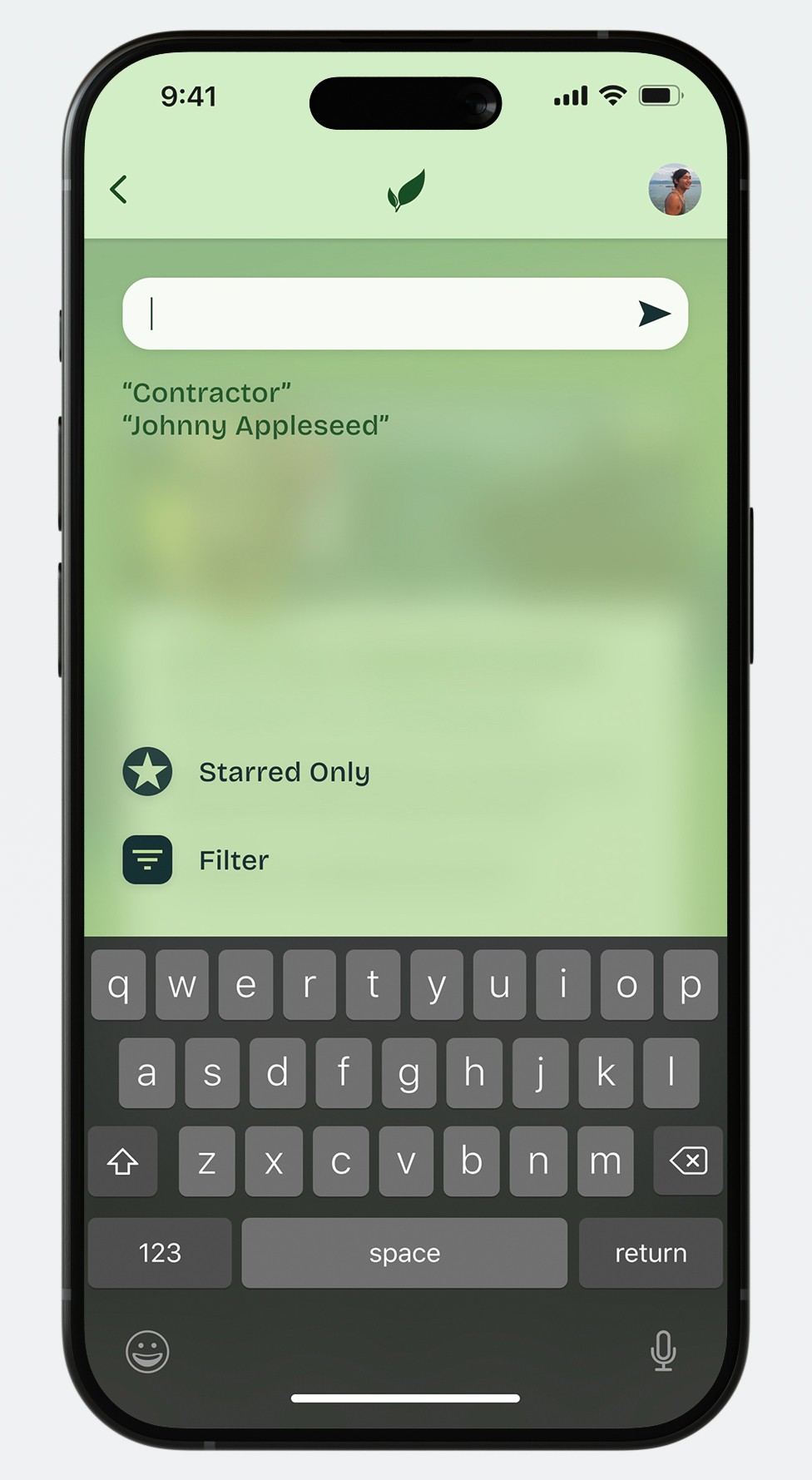
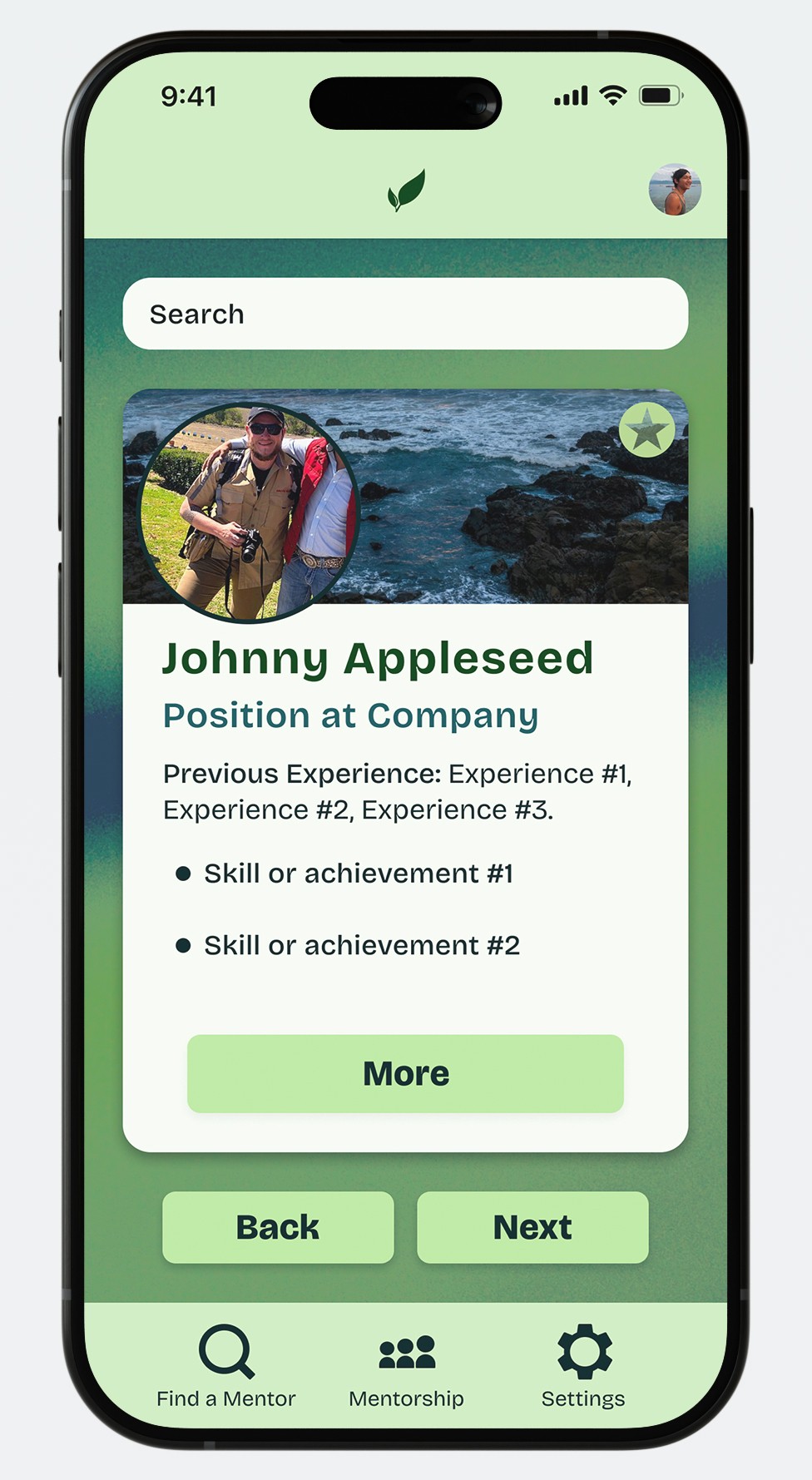
We used natural-language searching for the most effective, accessible, and user-friendly experience.
We designed the feed of mentor profiles to encourage personal connection, and a clear and concise understanding of each mentor's qualifications.
User Journey Part. 2: Viewing a Mentor's Profile
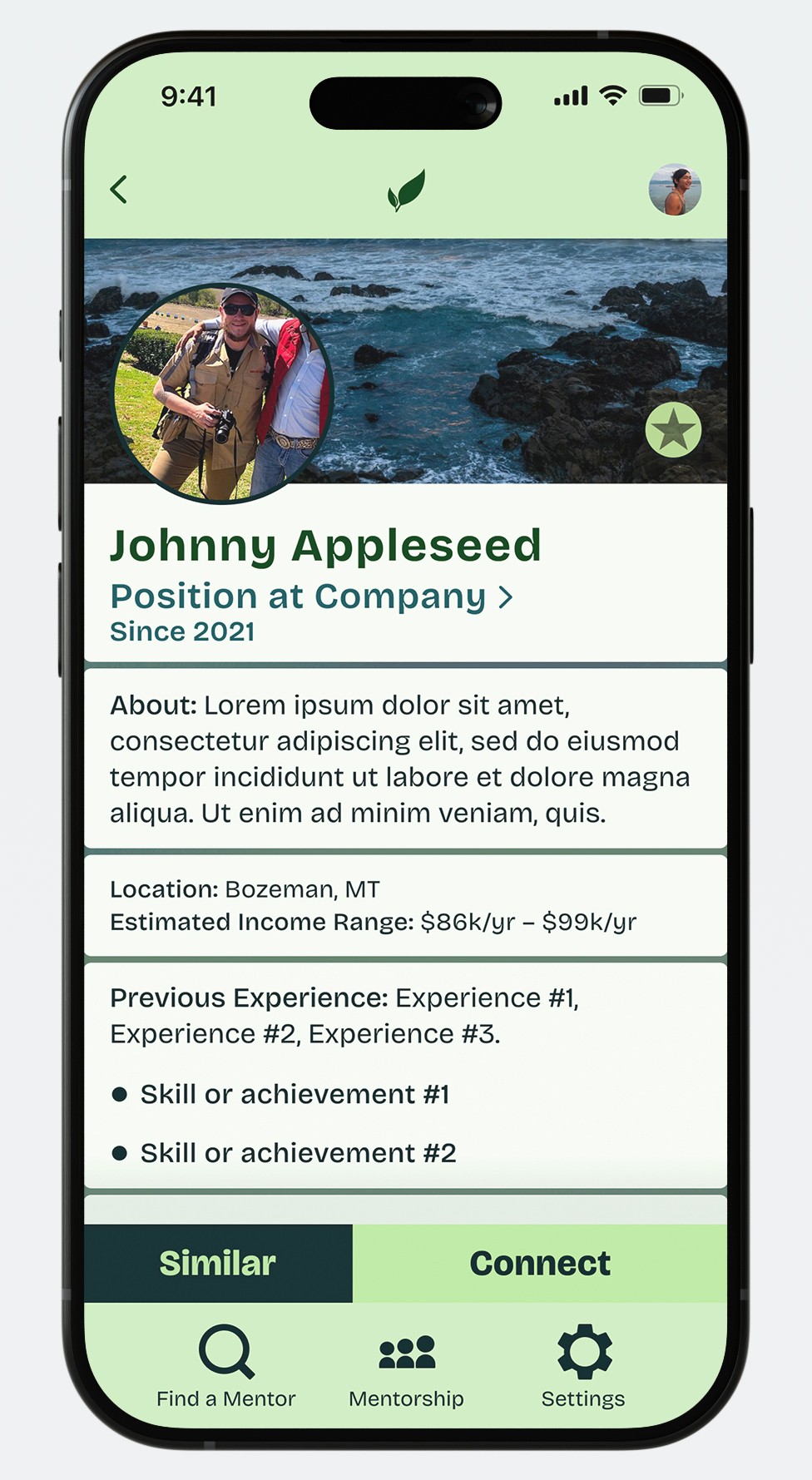
Mentor profiles include a balance of standardized qualifications (expressed consistently across mentor profiles) and self-expression.
The “Similar” button adds another method of filtering to the search process.
User Journey Part 3: Contacting a Mentor
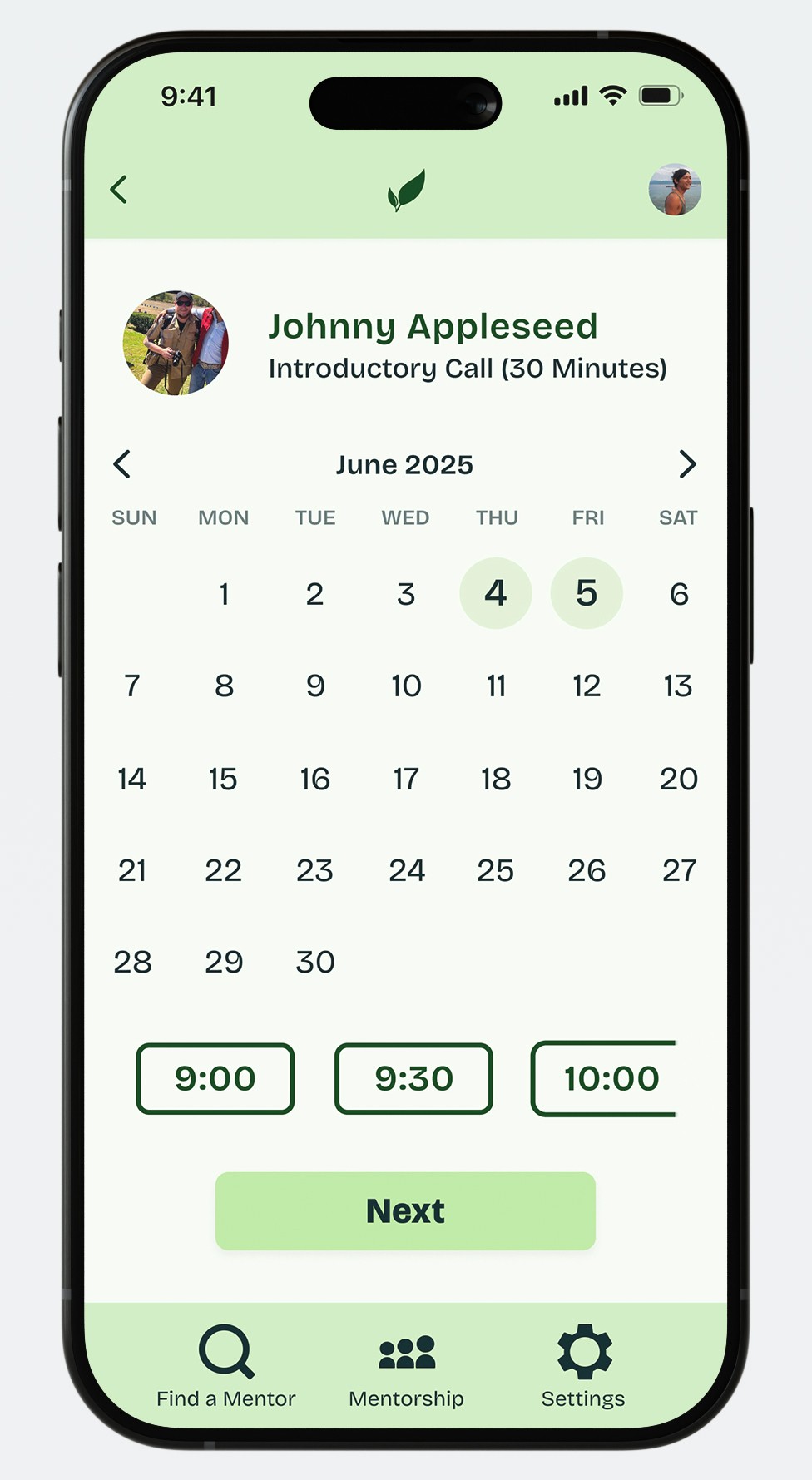
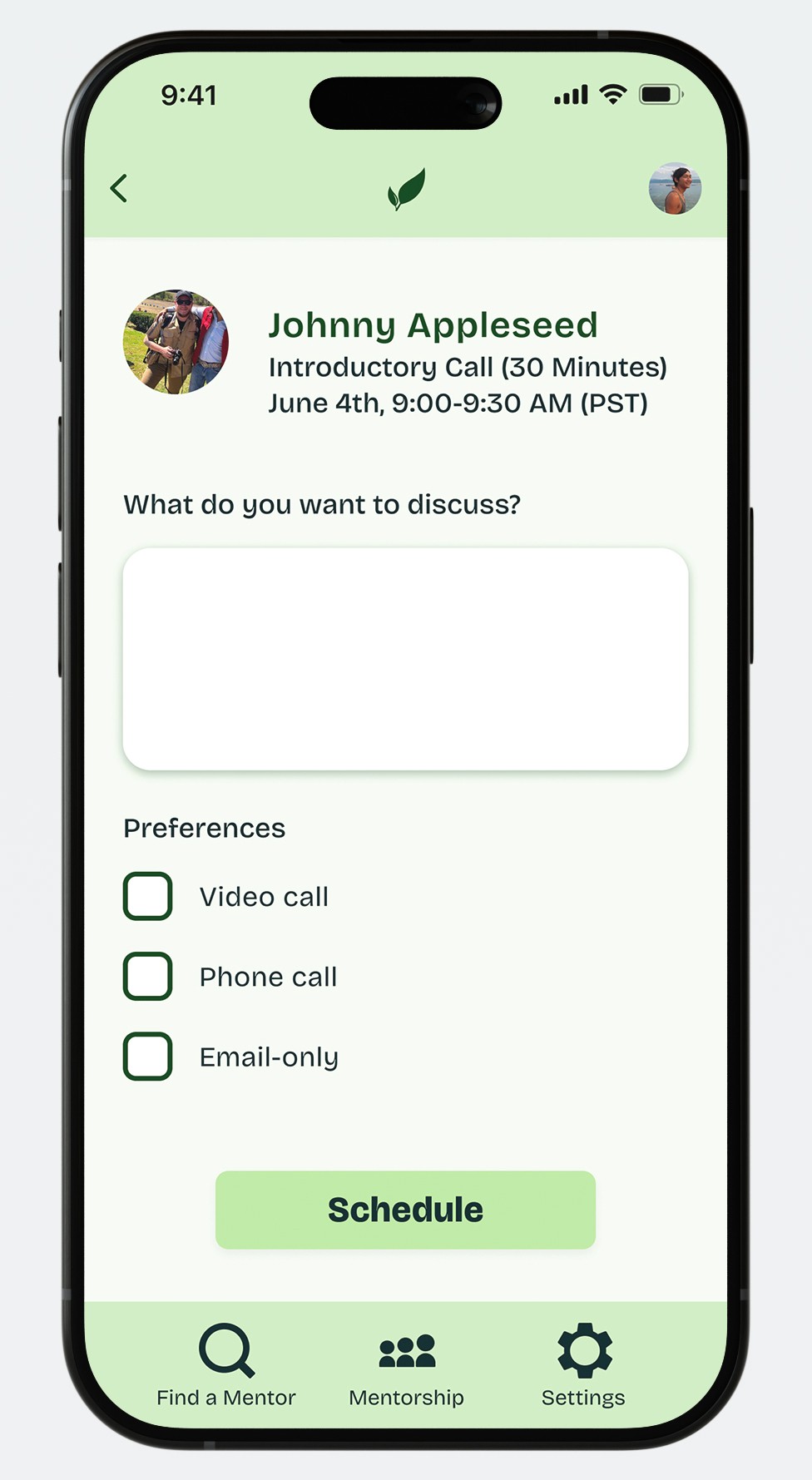

We designed the process of contacting a mentor to feel very familiar, and to be entirely straightforward. This process still makes space for users to choose a method that will work best for them.
We placed the responsibility of setting the meeting's agenda onto the mentees, as to minimize the effort required of mentors.
Conclusion and outcomes:
We identified the desire for a new kind of mentorship service, then designed a working prototype of an app to test it with our target users. I became the product’s lead UX/UI designer and product manager. Our design process was much faster than for previous products, – 2 months versus a median 11-month process – and it increased our organization’s specific understanding of their target users' needs. The “GreenConnect” app prototype was approved to hand over for development, but then scrapped after the Community Dreams Foundation entirely transitioned to developing AI products. I’m still satisfied with how efficiently our team executed, and by the positive reactions to “GreenConnect.”
“Alex assembled and led a cross-functional team of UX designers, researchers, and developers. Throughout the process, [he] consistently demonstrated an understanding of our target users, and a refined ability to address their needs with specific designs. He had a proactive approach, was receptive to new ideas, and incorporated my feedback while iterating the app. Alex proved to be a valuable team member, consistently delivering high-quality results.”
– Dion Richardson, founder of the Community Dreams Foundation